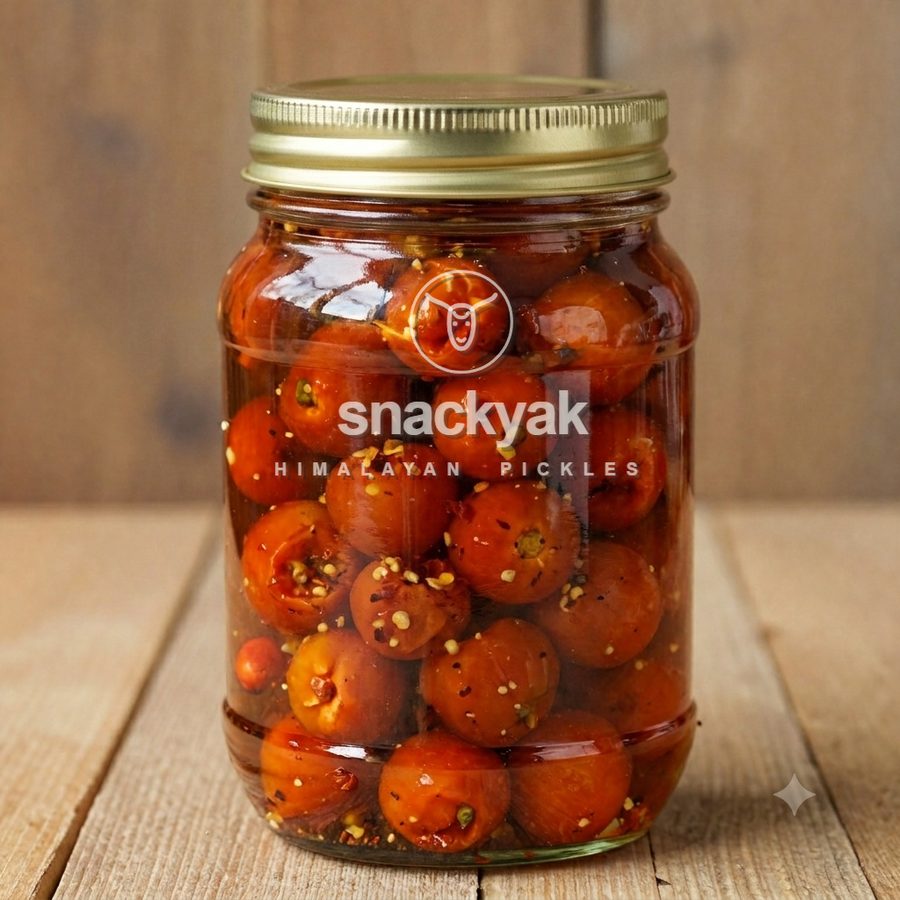
Ask anyone in the hills how achar is fermented and you’ll get the same answer twice: with salt, and with patience. The salt is the science. The patience is the season. For tama — young bamboo shoot — the patience runs the length of an entire monsoon.
Bamboo shoots are harvested in the early monsoon, when the new culms push up tender and pale. Left alone they are tough and faintly bitter. Fermented, they turn sour, complex and savoury — the backbone of dishes across Nepal, Sikkim and Darjeeling, from tama-aloo to a sharp pickle eaten straight from the jar.
What salt actually does
Fermentation sounds mysterious until you see what’s really happening. The shoots are cleaned, sliced and packed tight with salt. Salt pulls water out of the bamboo, and that briny liquid becomes the environment where the right microbes thrive and the wrong ones can’t. This is lacto-fermentation — the same family of process behind sauerkraut and kimchi — where naturally present Lactobacillus bacteria convert the shoot’s sugars into lactic acid.
That acid is the sourness you taste. It’s also the preservative: as the jar grows more acidic, it becomes inhospitable to spoilage. No vinegar, no additives, no shortcuts. Just salt setting the stage and time letting the cast take over.
Why the monsoon matters
Temperature governs the pace. The humid, mild monsoon air of the hills keeps fermentation moving steadily — fast enough to develop flavour, slow enough that it never turns harsh. Push it with heat and the sourness comes on sharp and one-note. Let the season set the rhythm and you get layers: tang, funk, a faint sweetness underneath.
You can rush a recipe. You cannot rush a monsoon. That’s the whole difference between achar and something that merely tastes like it.
From jar to plate
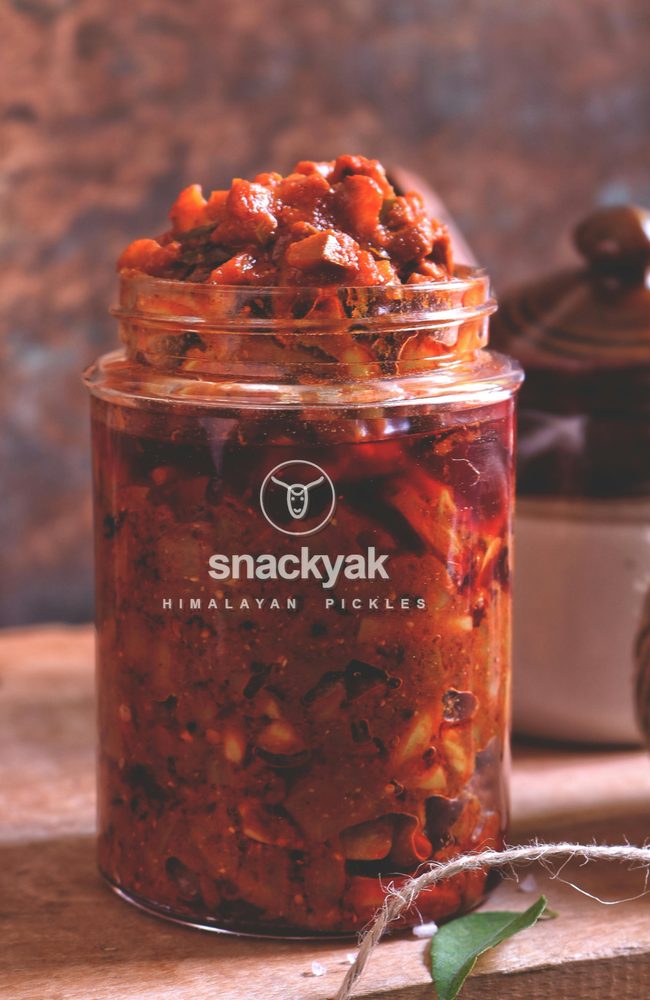
By September the tama has softened, turned a deeper colour, and gone properly sour. At that point it’s dressed — often with turmeric, chilli and a finish of cold-pressed mustard oil — and packed for the table. The oil seals it; the fermentation has already done the hard part.
This is why two jars of achar are never quite identical, and why we make in small batches. Fermentation is a living process, shaped by the year’s weather and the maker’s hand. A jar of tama isn’t a product so much as a record of a season.
Want to taste a monsoon? Explore the fermented pickle collection, or read how the same patience shapes dalle khursani.