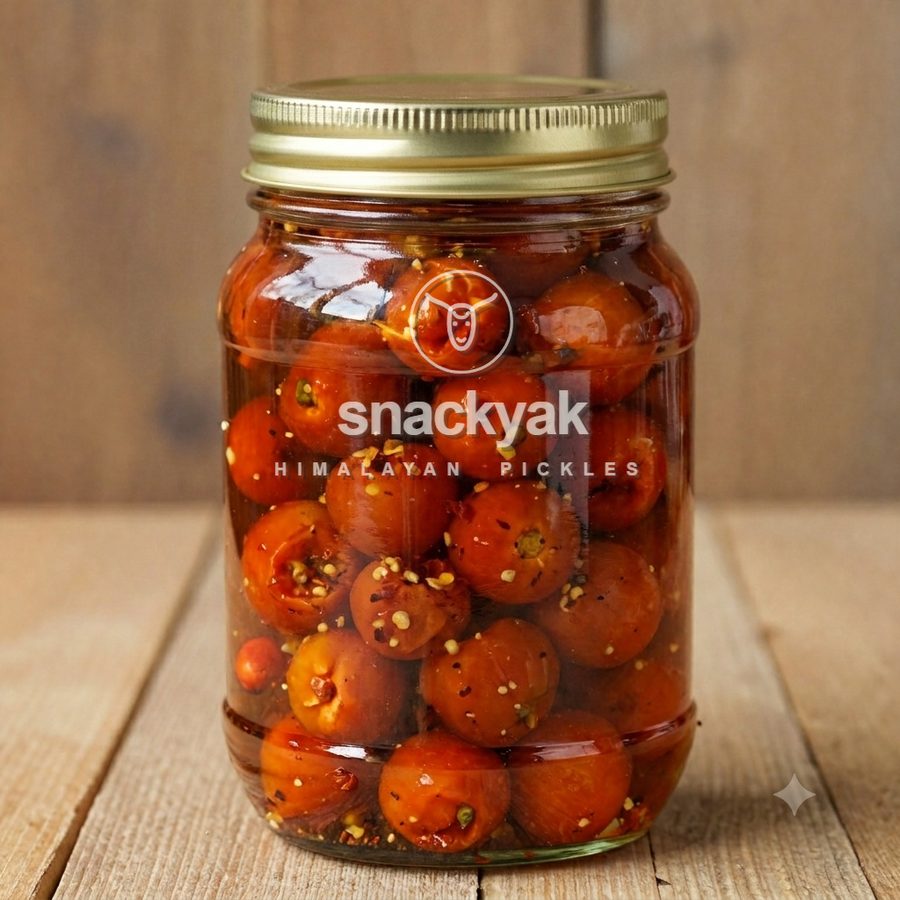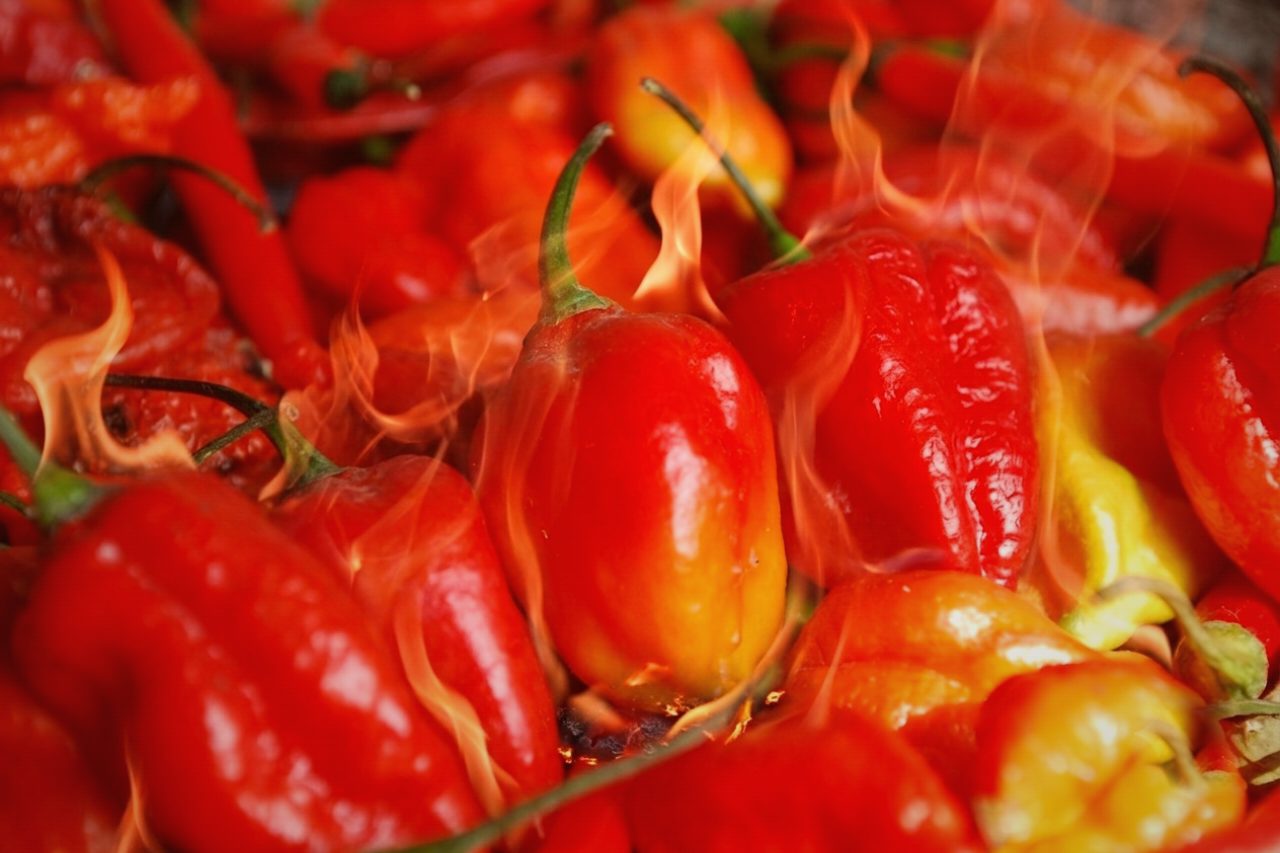
Pick one up and you could mistake it for a cherry tomato — round, glossy, sitting in your palm like something harmless. Then you taste it, and the misunderstanding clears up fast. Dalle khursani is one of the hottest chillies grown in the Eastern Himalayas, and in the hills of Sikkim and Darjeeling it is treated less like a vegetable and more like an heirloom.
Known locally as dalle or akbare, it sits somewhere between 100,000 and 350,000 on the Scoville scale — in the neighbourhood of a habanero, occasionally hotter. But heat alone is not why hill kitchens keep returning to it. The dalle has a bright, almost fruity sharpness that arrives before the burn and lingers after, the kind of flavour that makes a plate of momos or a bowl of dal feel finished rather than merely spicy.
A chilli with papers
In 2021, dalle khursani from Sikkim received a Geographical Indication (GI) tag — official recognition that the chilli’s character is tied to where it grows. That matters. The altitude, the cool mountain air, the monsoon-soaked soil and the way smallholder farmers cultivate it all shape a flavour that can’t be faithfully copied on the plains. When you buy a true dalle, you are buying a place as much as a pepper.
Most of it is grown by small farms on terraced hillsides, often as a side crop tucked between cardamom and ginger. Harvest is slow and done by hand, because the ripe fruit bruises easily and the plants keep producing through the season rather than all at once.
From hillside to jar
Getting that flavour into a jar without dulling it is the real work. We buy our dalle whole and ripe, never as a pre-ground powder, because grinding releases the volatile oils that carry the chilli’s perfume — by the time pre-ground chilli reaches a factory, most of that is gone.
In the maker’s kitchen the chillies are cleaned, sometimes lightly sun-cured, then packed with salt and cold-pressed mustard oil, which protects the colour and keeps the heat clean rather than acrid. Salt and oil do the preserving; time does the rounding-off. A few weeks in, the raw bite has mellowed into something deep and almost savoury.
The hills don’t grow dalle to be the hottest thing on the table. They grow it to be the most memorable.
How to actually use it
A little goes a long way. A teaspoon of dalle pickle stirred into curd makes the only momo dip you’ll ever need. It lifts plain rice, sharpens a thukpa, and turns leftover noodles into something you actually look forward to. Treat it as seasoning, not a dare.
That respect is the whole point. Dalle khursani earns its heat because everything around it — the soil, the hands, the slow pickling — is built to make that heat worth feeling. Taste it once, made properly, and the cherry-shaped warning sign starts to look like an invitation.
Curious where it ends up? Meet the people who make it in three generations of timur pepper, or browse the full collection of hill pickles.